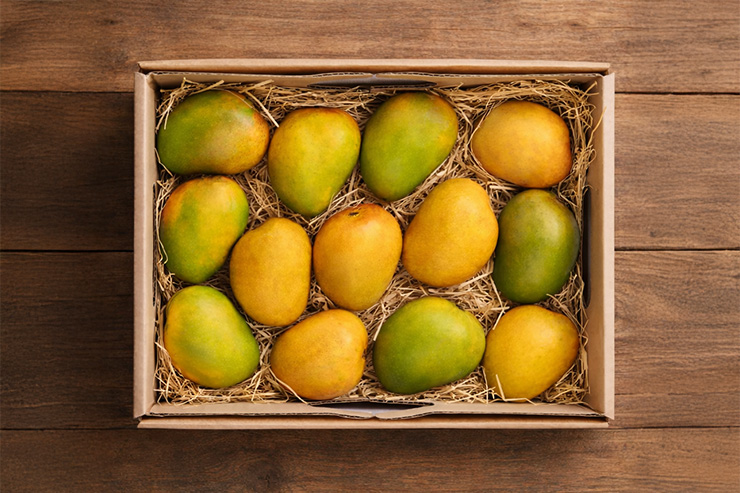
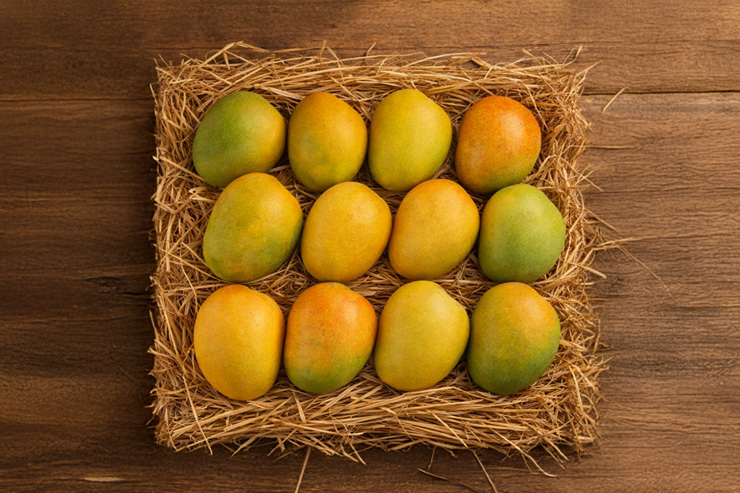
In the rush to meet growing demand, mango farming in India has changed. Large-scale, industrial methods are replacing slow, traditional orchard practices that once defined the legacy of the Alphonso mango. While production volumes may have increased, an important question remains.
What are we losing in the process?
At Aamrai, we work closely with traditional orchard farmers, and the contrast between industrial farming and heritage orchards is more visible than ever.
At the very foundation of any rise and fall of an empire along with it the culture, is the primal human trait, Greed. Mango farming, like any other commercially lucrative crop, is no different. And its commercial attractiveness without factoring in the overall ecological imbalances, is hurtling down this destructive path. The overall problem is further exacerbated by irregular weather patterns directly as a result of Climate change. Commercial mango farming focuses on scale, speed, and output without any consideration to the overall ecology. Advanced grafting methods, availability of stable root stock, coupled with High-density plantations, excessive use of agro-chemicals and artificial ripening methods are often used to maximize yield and accelerate market supply. When humans cannot control weather patterns they start relying heavily on agro-chemical inputs to make up for the other shortcoming, in the hope of overcoming these challenges.
On paper, this system looks efficient. More mangoes. Faster supply. Competitive pricing.
But efficiency often comes at a cost, and that cost is permanent damage to the ecology including deterioration of Soil Health, Depletion of Water Tables, Imbalances in the symbiotic relationships between ecological living beings, ultimately resulting in loss of habitat for some organisms and impacting the output.
In many mango-growing regions like Ratnagiri and Devgad in Maharashtrra, Gir & Kutch in Gujarat as well as Malda region at the intersection of Bihar, Jharkhand and W Bengal, traditional orchard owners are struggling to compete with commercial growers who prioritize speed, quantity and output over character.
At Aamrai Organic we consciously choose not to follow that path.
Traditional mango orchards are built on patience. Many trees are half a century old and some of them have become part of the family folklore. For e.g. some families remember their important events associated with that particular tree and the seasons, and not dates, some important event taking place with flowering that particular tree in that summer, or providing the first mango of that season and celebrating birthdays, anniversaries, births and all other festivities under that mango tree. The Mango tree is not just a means to an end, but the end itself. For these mailies, mango cultivation and farming practices are guided by generational wisdom rather than production targets.
These orchards focus on:
The result is not just a regular Mango – But A Mango that’s created by Nature, in tune with Nature and cared by people who live in harmony with Nature.
This Aamrai Organic Mango offers: Aroma – Flavour – Nutrition.
When you taste these Mangoes grown in traditional orchards, you experience depth, the creamy texture, the saffron pulp, the rich fragrance. These qualities are difficult to replicate in commercial / industrial systems.
At Aamrai Organic, we partner with farmers who still believe in this slower, quality-first approach.
Good things come to those who wait and we certainly have patience.
Commercial farming often depends heavily on agro-chemical inputs to increase output. Over time, this not only impacts the health of the soil but also the overall health of the tree whilst negatively impacting microbial ecology.
Traditional farming, especially Certified Organic Alphonso Mangoes cultivation, nourishes the soil using natural compost, cow-based inputs, and organic matter. With complete eradication of agro-chemical inputs like growth hormones and other agro-chemical inputs, the trees become hardened to other ecological conditions and healthier by developing natural resistance methods to stay healthy and bear fruit. The soil starts to retain its nutrients and most importantly its natural character which lends the fruit its unique flavour and characteristics. And as its well known, healthy soil produces healthier trees, and healthier trees produce superior fruit.
The long-term difference is significant.
When the entire ecosystem is treated as a living organism rather than a production unit, mango trees thrive for generations. That is the philosophy Aamrai Organic supports through its sourcing practices.
One of the biggest losses in commercial mango farming is flavour integrity.
High-yield farming may produce visually appealing fruit in large quanity, but taste often becomes secondary. Fast growth cycles and artificial ripening can reduce the complexity of sweetness and aroma.
Traditional orchards allow the fruit to mature naturally on the tree and ripen slowly after harvest. This process enhances:
When customers choose Aamrai Organic’s GI-tagged Organic Mangoes, they are choosing mangoes that are grown in harmony with nature and naturally ripened with care — not rushed to market.
Commercial / Industrial systems often shift bargaining power away from small farmers. Price wars and bulk contracts can push traditional orchard owners to either adopt chemical shortcuts or exit the industry altogether.
Many generational mango farmers face a difficult decision:
Maintain traditional practices and earn less, or increase yield using chemicals to survive competitive markets.
When consumers pre-book mangoes from brands like Aamrai Organic, it provides farmers with stability. Advance commitments reduce financial pressure and allow them to maintain organic and traditional farming methods.
In addition, commercial farming and modern trade, also compels the farmers to discard and reject fruits with some blemish / marks / ‘daagh’ / indentations / aesthetic flaws / misshape. These “ddaghi” / “दाग़ी” mangoes, as they are known in local parlance, are often 30%-30% of the total mango production. And farmers are often forced to sell them at nearly throw away prices, resulting in massive loss to these farmers. Aamrai Organic has a program to also offtake these “ddaghi” / “दाग़ी” mangoes and provide it as an option to all customers who value the environment, fair-trade practices with Farmers and believe in preserving the tradition of Natural farming.
Supporting traditional orchards is not just about taste, it is about sustaining livelihoods.
Regions like Ratnagiri and Devgad are globally recognized for producing GI-tagged Alphonso mangoes. The Geographical Indication (GI) tag protects authenticity and regional identity.
However, when commercial Farming methods dominate, even GI regions risk losing their uniqueness.
True GI-tagged organic mangoes are not just about geography, they are about farming integrity. Off late states like Karnataka, Keral and Gujarat due to their enterprising farmers and availability of the land as well as commercial attractiveness of the mango as a crop, have sought claim to “Alphonso”. This has caused a massive uproar amongst the GI Tagged 5 districts of Konkan region and the matter is subjudice as well as represented in the Maharashtra assembly. As matters stand GI Tag to Maharashtra’s Alphonso mangoes, is not only a matter of Pride but also about Identity and Aamrai Organic stands steadfastly in support of the Maharashtra’s GI Tagged Alphonso / Hapus / “हापुस” growing region farmers.
Aamrai Organic works directly with orchard owners who preserve these heritage practices, ensuring that the mangoes retain their regional character and authentic quality.
Artificial ripening techniques may shorten delivery timelines, but they compromise flavour and safety.
Traditional ripening, using natural methods, allows the fruit to develop gradually. The difference is noticeable in aroma and sweetness.
Aamrai’ Organic’s commitment to naturally ripened mangoes ensures that customers receive fruit that reflects authentic farming values.
Patience cannot be industrialized / commercialised.
Low prices often hide unseen costs:
Premium Organic Alphonso Mangoes may cost more, but they reflect true value, ethical sourcing, sustainable practices, unmatched aroma and superior taste, all culminating into a superior experience.
When customers choose Aamrai Organic, they are not just buying mangoes. They are supporting a farming model that prioritizes sustainability, long-term quality over short-term gain.
The shift toward commercial / industrial farming is not inevitable. Consumer awareness plays a powerful role in shaping agricultural practices.
By choosing Certified organic Alphonso Mangoes and supporting traditional orchards, buyers help preserve:
Pre-book mangoes from responsible brands like Aamrai Organic ensures that farmers can plan their harvest without pressure to compromise on quality.
If commercial / industrial farming continues unchecked, we risk losing more than flavour.
We risk losing:
Traditional orchards represent patience, care, and respect for nature’s timing. Comercial / Industrial farming represents greed, speed and scale.
The future of mango farming depends on which model consumers choose to support.
At Aamrai Organic, we consciously support traditional orchard farmers who grow organic Alphonso Mangoes with integrity. Our sourcing prioritizes Certified Organic Alphonso Mangoes as well as Kesar, Pairees, Langda, Chaunsa, Dusheri and Banganpalli mangoes from trusted GI regions, ensuring authenticity and premium quality.
We encourage customers to pre-book mangoes to secure early harvest batches and support farmers directly. Every order strengthens a system that values tradition over shortcuts.
Because in the end, protecting traditional orchards is about preserving the soul of mango farming.
And that is something worth saving.
In essence, Human greed knows no bounds, but it is incumbent upon us to make a choice and succumb to that greed or make an informed choice, that leaves our mango farmers with a sustainable future and a healthier planet for our future generations.
– Shaunak Joshi

USDA (USA)

GI Certified
India Organic


Copyright © 2025. All rights reserved by Aamrai Organic
WhatsApp us
Share your details to receive an exclusive discount on the first batch of premium Malawi Mangoes this season. Don’t miss out on the taste of true luxury!